Butterfly Meaning in the Bible: Transformation and New Life in Christ
Have you ever wondered what butterflies and biblical teachings have in common? You might not expect the delicate flutter of these colorful creatures to hold profound spiritual significance, but prepare for a majestic metamorphosis of your understanding! In “Butterfly Meaning in the Bible: transformation and New Life in Christ,” we’ll dissect the layers of symbolism behind these lovely insects and explore how their transformative journey mirrors our own spiritual rebirth in Christ. Whether you’re a die-hard entomologist or just someone who admires pretty wings, this article will take you on a whimsical flight through scripture, revealing how butterflies remind us that change is not only beautiful but divinely orchestrated.So, sit back and get ready to spread your wings as we embark on this enlightening exploration!
Butterfly Symbolism in Scripture and Its Roots in Creation
The butterfly has long been revered as a symbol of transformation, reflecting the deep spiritual truths found throughout Scripture. In manny ways,the life cycle of a butterfly mirrors the Christian journey of faith. Just as a caterpillar undergoes a profound metamorphosis to emerge as a beautiful butterfly, so too do believers experience renewal and rebirth in Christ.This theme of transformation is prominently illustrated in various biblical passages,notably in 2 Corinthians 5:17,which states,“Thus,if anyone is in Christ,he is a new creation. The old has passed away; behold, the new has come.”
From a creation standpoint, the beauty and complexity of butterflies may also evoke the divine craftsmanship of the Creator. The initial stage of a butterfly’s life, as a caterpillar, is often associated with the fleshly nature of humanity. This state, while necessary for growth, must ultimately give way to something greater. The progression from caterpillar to chrysalis—where transformation occurs—can be likened to the period of spiritual growth and discipleship. As believers engage with God’s Word, they are gradually reshaped and refined.
Along with transformation,butterflies symbolize hope and resurrection,reminding us of the promise of new life. This idea resonates with the resurrection of Jesus Christ, which represents the ultimate transformation of death into life. The butterfly’s emergence from the cocoon signifies the hope that believers have in eternal life — a promise that resonates through passages like Romans 6:4: “We were therefore buried with him through baptism into death in order that, just as Christ was raised from the dead through the glory of the Father, we too may live a new life.”
The connection between the butterfly and biblical symbolism is further illustrated in various biblical references and teachings:
| Symbolism | Bible verse |
|---|---|
| Transformation | 2 Corinthians 5:17 |
| New Life | Romans 6:4 |
| Hope | Isaiah 40:31 |
| Beauty of Creation | Psalm 139:14 |
The butterfly encapsulates a deep metaphor for the believer’s life — a testament to God’s mighty power to transform, renew, and breathe life into what was once mere existence. It is a reminder that with faith, we, too, can rise from the shadows of our past into the radiant light of a new creation in Christ.
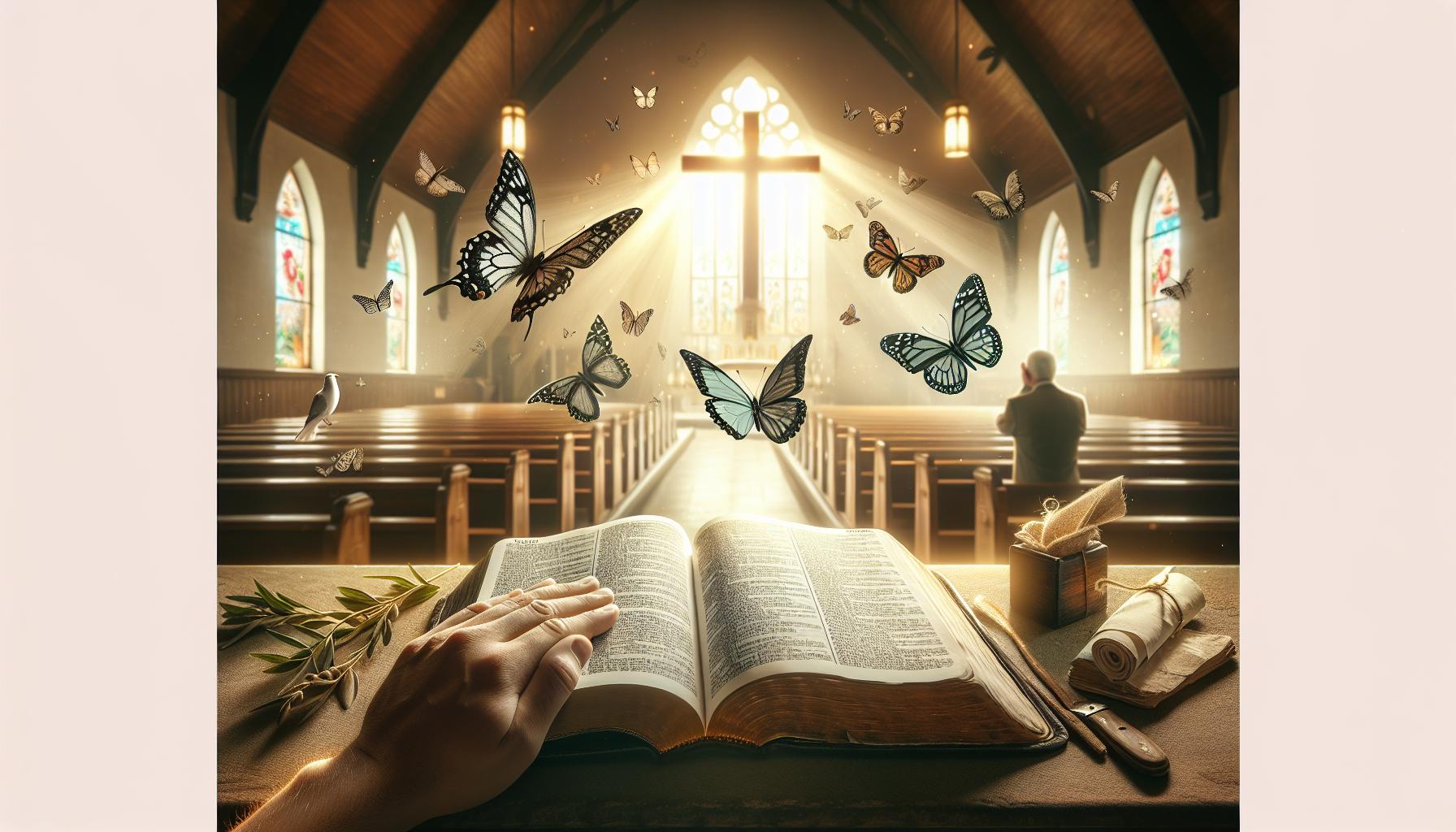
Exploring the Spiritual Metaphor of Transformation Through Butterflies
Throughout biblical narratives, the transformation of the butterfly serves as a profound spiritual metaphor, illustrating the journey of the soul from the old self to new life in Christ. This metamorphosis resonates deeply with the themes of resurrection and renewal found in scripture. Just as a caterpillar undergoes a remarkable change to emerge as a butterfly, believers are called to shed their old ways and embrace a new identity in Christ.
In the context of faith, the stages of a butterfly’s life—from egg to larva (caterpillar), then pupa (chrysalis), and finally to a vibrant butterfly—symbolically represent important spiritual milestones:
- Egg: The initial stage of potential, signifying the seed of faith placed within a believer’s heart.
- Caterpillar: A time of growth and learning, where nourishment from the Word of God leads to spiritual progress.
- Chrysalis: This transformative phase indicates a deep inner change, often marked by trials and a retreat into prayer and reflection.
- Butterfly: The final stage represents a new life empowered by the Holy spirit, reflecting the beauty and purpose that comes with faith.
Scripture eloquently depicts this transformation process, especially through passages that encourage believers to embrace their new identity. As a notable example, 2 Corinthians 5:17 declares, “Thus, if anyone is in Christ, the new creation has come: The old has gone, the new is here!” This verse echoes the metamorphosis of the butterfly, reminding us that faith in christ brings forth a radical change, inviting us to open our hearts to the transformative power of His love.
Recognizing the butterfly’s journey can inspire believers to reflect on their own spiritual growth. Engaging in practices such as prayer, worship, and community can assist in navigating the phases of transformation, helping to cultivate a deeper relationship with God and understanding of one’s purpose. this metaphor ultimately teaches that through faith, believers can experience a beautiful unveiling, akin to the butterfly emerging into the world, resplendent in newfound life.
New Life and Resurrection: How Butterflies Reflect Christs Promises
The metamorphosis of a butterfly, transitioning from a caterpillar to a magnificent winged creature, serves as a poignant metaphor for the promises found in Scripture. Much like the resurrection, this transformation symbolizes hope, renewal, and divine purpose. In the Bible, the butterfly reflects the journey of the soul as it embraces the transformative power of christ’s love and resurrection.
Exploring this symbolism, we can illustrate key aspects of how butterflies resonate with Christ’s promises:
- Renewal: Just as a butterfly emerges from its cocoon, believers experience spiritual rebirth through christ.this act of faith leads to new beginnings and a life filled with grace.
- Hope: The delicate beauty of a butterfly reminds us that even the most fragile lives can be transformed. It reflects the hope found in Romans 6:4, which speaks of walking in newness of life.
- Transformation: The ongoing transformation throughout a butterfly’s life, akin to our journey in Christ, emphasizes that faith is not a one-time event but a continual process of growth and change.
This connection between butterflies and spiritual rebirth is further illustrated in the following table, highlighting biblical references to resurrection and transformation:
| Scripture | Key Theme |
|---|---|
| 2 Corinthians 5:17 | New Creation in christ |
| John 3:3 | Born Again |
| Isaiah 40:31 | Strength Renewed |
| Philippians 3:20-21 | Transformation of our Bodies |
the butterfly is not merely a beautiful creature but a profound symbol of the spiritual promises made in the Bible. Through their life cycle,butterflies remind us of the resurrection power that transforms our lives,encouraging believers to embrace their identity in Christ and walk boldly in their new life.
The Lifecycle of a Butterfly: Lessons in Growth and Change
The butterfly’s metamorphosis mirrors the profound transformation experienced in a life renewed by faith. From the humble beginnings as an egg,the journey of a butterfly encapsulates stages that famously symbolize spiritual evolution,echoing biblical themes of death and rebirth. In understanding this lifecycle, we draw important parallels to the teachings found in the Bible regarding spiritual growth and renewal.
Much like the caterpillar, we begin our journey grounded in a world that may feel limiting or uncertain. This phase of life, representing our earthly existence, is often filled with hardships and trials. yet, it is during this time that we gather experiences, much like the caterpillar consumes leaves to store energy.This stage serves as a reminder that:
- Patience is essential: Growth requires time and perseverance.
- Planning for change: Just as the caterpillar prepares for the chrysalis stage, we too must prepare our hearts for transformation.
The chrysalis, a transformative and vulnerable state, symbolizes the spiritual rebirth that occurs when one fully submits to God’s will. this period is often filled with discomfort and solitude, reflecting the struggles faced prior to awakening in faith. The Bible especially emphasizes this transformational phase,illustrating that:
- Renewal occurs through trials: Just as the butterfly emerges through the struggles of breaking free,we are reminded that overcoming our challenges leads to spiritual enlightenment.
- embracing vulnerability: Allowing ourselves to be shaped by divine intervention,much like the caterpillar in the chrysalis,leads to substantial growth.
the emergence of the butterfly into the world encapsulates the ultimate message of renewal and hope. It serves as a powerful reminder that embracing change in Christ leads to a new life filled with purpose and beauty. As we reflect on this divine process, consider the following attributes that a renewed life embodies:
| Attributes of a Renewed Life | Biblical References |
|---|---|
| Beauty and Transformation | 2 Corinthians 5:17 |
| Freedom from Bondage | Galatians 5:1 |
| New Purpose | Ephesians 2:10 |
| Joyful Existence | John 10:10 |
In acknowledging these stages and attributes, we open ourselves to understanding our spiritual journeys better. Embracing the lifecycle of the butterfly invites us to reflect on our growth and the beautiful transformation that occurs when we accept new life in Christ.
Biblical Characters and Their Personal Transformations Compared to Butterflies
The transformation of a butterfly—from a humble caterpillar to a magnificent winged creature—mirrors the journeys of several biblical figures, illustrating the theme of renewal and divine purpose. Just as the butterfly undergoes a metamorphosis, individuals like Saul of Tarsus experienced profound personal changes, reshaping their identities in alignment with God’s will.
Key Biblical Characters and Their Transformations:
- Saul of Tarsus: Initially a persecutor of Christians, his dramatic conversion on the road to damascus led him to become Paul the Apostle, a fervent advocate for the faith.
- Mary Magdalene: Once tormented by seven demons, she found freedom and new purpose as the first witness to Christ’s resurrection, a testament to the power of redemption.
- The Prodigal Son: After squandering his inheritance, his return to his father signifies repentance and the joy of reconciliation, symbolizing spiritual rebirth.
These transformations resonate with the lifecycle of a butterfly, illustrating several principles:
| stage of Transformation | Biblical character | Transformation Impact |
|---|---|---|
| Caterpillar | Saul of Tarsus | From adversary to apostle |
| Pupa | Mary Magdalene | Healing and purpose in Christ |
| Butterfly | The Prodigal Son | Return, forgiveness, and new life |
These stories highlight that just as a butterfly emerges transformed and free, believers in Christ are invited to experience a similar metamorphosis—leaving behind past identities and embracing their new lives, guided by faith and renewed purpose. The essence of the butterfly serves as a powerful reminder of the potential for transformation, an integral theme woven throughout scripture.
Practical Steps for Embracing Personal Transformation in Light of Biblical teachings
embracing personal transformation is both a journey and a choice that aligns closely with biblical teachings. To embark on this path, it’s essential to incorporate specific, actionable steps that can facilitate growth and renewal. Here are some practical steps you can take:
- Engage in daily Prayer: Establish a consistent prayer routine that allows for intimate interaction with God. This practice helps center your thoughts and opens your heart to His guidance.
- study Scripture: Dive deep into biblical texts that focus on transformation.Consider passages like Romans 12:2, which emphasizes the renewal of the mind. Create a schedule to study relevant scriptures regularly.
- Join a Community: Surround yourself with like-minded individuals who are also on a journey of transformation.Engage in group discussions or Bible study classes to share experiences and encourage one another.
- Reflect and Journal: Maintain a journal to document your thoughts, prayers, and progress. Include reflections on your transformation journey, noting moments of growth and areas where you seek further change.
In addition to these personal practices, consider integrating the concept of transformation into your everyday interactions. For instance, demonstrate Christ-like behavior in your relationships and embody the values of love, patience, and kindness. These actions can serve as a tangible representation of the new life you are cultivating.
| Action Step | Biblical reference | Benefits |
|---|---|---|
| Daily prayer | Philippians 4:6-7 | Peace of mind and clarity |
| Scripture Study | 2 Timothy 3:16-17 | Increased wisdom and understanding |
| Community Engagement | Hebrews 10:24-25 | Support and accountability |
| Reflection/Journaling | Psalm 77:12 | Awareness of growth and resilience |
ultimately,personal transformation is a continuous process that requires commitment and perseverance. By integrating these steps into your life, you align yourself with the transformative power of Christ, allowing you to evolve and flourish in your spiritual journey.
Cultivating a Heart of Renewal: Spiritual Practices to Embrace Change
Embracing change often requires a deep spiritual renewal within ourselves, aligning with the transformative journey symbolized by the butterfly in the biblical context. This journey of renewal calls for intentional practices that nurture our spirit and prepare us to evolve positively through life’s transitions. Here are some effective spiritual practices that can cultivate a heart open to renewal:
- Prayer and Meditation: Establishing a regular prayer and meditation practice can create a sacred space for reflection, allowing you to connect with God and seek guidance during times of transition. This quiet time fosters an environment where transformation can take root.
- Scripture Reflection: Engaging deeply with passages that speak of change and renewal, such as 2 Corinthians 5:17, can help reinforce the idea that change is a divine process.Journaling your thoughts as you reflect on these scriptures can provide clarity and insight.
- Fasting and Simplification: Practicing fasting or simplifying your life can help detach from malleable distractions, prompting a greater focus on spiritual growth. These acts can bring clarity and enhance your ability to perceive what needs renewal in your life.
- Community engagement: Becoming involved in a faith-based community can provide support and encouragement. Sharing experiences with others who are also navigating change can uplift and inspire personal growth.
To deepen your process of renewal, consider integrating a weekly rhythm of spiritual practices that allow you to explore your thoughts, emotions, and relationship with God. Below is a simple guide to incorporate these practices effectively:
| Day | Practice | Reflection Focus |
|---|---|---|
| Monday | Prayer | Seeking guidance for the week ahead |
| Tuesday | Scripture Reading | Understanding transformation in Christ |
| Wednesday | Meditation | Embracing stillness and clarity |
| Thursday | Community Sharing | Learning from others’ journeys |
| Friday | Fasting | Identifying distractions |
| Saturday | Journaling | Documenting insights and progress |
| Sunday | Reflection | preparing for the new week |
By embracing these spiritual practices with intentionality, we open ourselves to the profound transformations that the butterfly symbolizes—a journey towards new life in Christ. Each step taken in faith not only enriches our own lives but also reflects the beauty of renewal in the lives of those around us.
The Role of Community in Supporting Personal transformations: A Biblical Perspective
In the journey of personal transformation, community plays an essential role reminiscent of the support systems described in the Bible. Just as a butterfly emerges from its cocoon, believers undergo profound changes in their spiritual lives, frequently enough facilitated by the connections they cultivate within their faith communities. The story of the early church in Acts 2:44-47 illustrates this beautifully,showcasing how believers shared their possessions,supported one another,and experienced collective growth in faith and spirit.
Community nurtures personal transformation in several significant ways:
- Encouragement and Accountability: Much like iron sharpens iron (Proverbs 27:17), mutual encouragement within a community inspires individuals to strive for their goals. The accountability found in small groups or fellowship gatherings can foster personal growth and adherence to spiritual disciplines.
- Shared experiences: When individuals share their testimonies and life stories, they create an environment of vulnerability that promotes healing and transformation. Biblical stories, such as those of the prodigal son (Luke 15:11-32), resonate deeply, reminding us that redemption and change are possible.
- Prayer Support: Engaging in prayer with a community offers a powerful avenue for transformation. James 5:16 emphasizes the effectiveness of prayer in both personal healing and communal upliftment, highlighting how collective spiritual endeavors can instigate profound changes in individual lives.
This synergy within a community not only encourages personal transformation but also reflects the divine design of the body of Christ, as articulated in 1 corinthians 12:12-27. Each member serves a unique purpose, contributing to the overall health and growth of the church, thus fostering an environment where personal and communal transformations flourish together.
FAQ
What does the butterfly symbolize in the context of the Bible?
In the context of the bible, the butterfly is often seen as a powerful symbol of transformation and new life. This imagery emerges especially when considering the butterfly’s life cycle, which includes stages like the egg, caterpillar, chrysalis, and adult butterfly. This metamorphosis is reflective of the Christian belief in spiritual renewal and rebirth. In 2 Corinthians 5:17, Paul writes, “Therefore, if anyone is in Christ, he is a new creation; the old has passed away; behold, the new has come.” Just as the caterpillar transforms into a beautiful butterfly, so too is the believer transformed through faith in Christ.
The butterfly also embodies the idea of hope and resurrection, particularly when viewed through the lens of the resurrection of Jesus Christ. This theme can be supported by passages like Romans 6:4, which reads, “We were therefore buried with him through baptism into death in order that, just as Christ was raised from the dead through the glory of the Father, we too may live a new life.” In this light, the butterfly serves as a reminder of the journey from death to life, evoking a sense of spiritual awakening and renewal.
How does the life cycle of a butterfly relate to Christian beliefs?
The life cycle of a butterfly can serve as a profound metaphor for Christian beliefs surrounding salvation and personal transformation. The stages of a butterfly’s life—egg, larva (caterpillar), pupa (chrysalis), and adult butterfly—mirror the stages of a believer’s journey: abandonment of the old self, spiritual growth, and eventual transformation through Christ.
As a notable example, the caterpillar stage can symbolize the phase of sin and worldly living, where believers may feel trapped in their transgressions. This stage,much like the caterpillar,represents a time of growth. The chrysalis, or pupa stage, reflects the phase where one undergoes serious spiritual transformation. This can relate to soul-searching periods in one’s faith journey, akin to the way a butterfly changes within the protective casing before emerging. the adult butterfly signifies resurrection and new life, highlighting the ultimate goal for Christians: to live a life marked by the grace and love of Christ after experiencing redemption.
Thus, the lifecycle of the butterfly beautifully illustrates the Christian doctrine of renewal in a relatable way, enhancing understanding and gratitude for the profound changes that faith can inspire.
Are there any biblical references that explicitly mention butterflies or similar imagery?
while butterflies are not explicitly mentioned in most translations of the Bible,the imagery of transformation and beauty closely associated with butterflies is prevalent throughout various scripture. For example,Proverbs 30:28 notes,”The spider skillfully grasps with its hands,and it is in kings’ palaces.” Even though this doesn’t specifically mention butterflies, it accentuates the beauty found in creation, which can be analogously linked to the transformation seen in butterflies.
Furthermore, Isaiah 40:31 offers imagery of renewal that resonates with the symbolism of the butterfly: “But those who hope in the Lord will renew their strength. They will soar on wings like eagles; they will run and not grow weary, they will walk and not be faint.” The concept of soaring on wings evokes a sense of elevated transformation, much like the journey of a butterfly as it rises to the air after emerging from its chrysalis.
in a more metaphorical sense,the bible invites readers to examine the natural world for insights about spiritual truths. In this light, the beauty and transformation inherent to butterflies align with many principles espoused in biblical teachings.
How do butterflies represent hope and resurrection in a biblical sense?
Butterflies have long been regarded as symbols of hope and resurrection, particularly within Christian contexts that emphasize themes of renewal and new beginnings. The metamorphosis from caterpillar to butterfly evokes the idea of emerging from darkness into light, akin to Christ’s resurrection and the hope it offers believers. In John 11:25, Jesus states, “I am the resurrection and the life. The one who believes in me will live, even though they die.” This passage underscores the promise of eternal life, reflecting the transformational journey represented by butterflies.
Moreover, the act of a butterfly emerging from the chrysalis can be seen as an analogy for overcoming trials and tribulations. It serves as a powerful reminder that though life may present challenges and periods of difficulty, brighter days are ahead.The beauty of a butterfly,which comes from its struggle to break free,reflects the idea that true beauty and purpose frequently enough arise from challenges faced during earthly existence.
Additionally, the butterfly’s delicate nature reinforces the message of vulnerability and faith. Just as butterflies rely on their wings to navigate the world, christians are called to place their trust in God for guidance and strength, promoting the idea of hope that transcends earthly struggles.
What lessons can we learn from the transformative nature of butterflies?
The transformative nature of butterflies teaches several valuable lessons that resonate with the Christian faith, focusing primarily on themes of growth, patience, and faith. Just as a butterfly undergoes significant change to become what it is indeed meant to be, individuals are encouraged to embrace their own spiritual journeys. This transformation is frequently enough gradual and requires patience.
One key lesson is the idea of letting go of the past. The caterpillar represents the prior state of being, which many may need to leave behind to explore their potential further. Philippians 3:13-14 states, “but one thing I do: Forgetting what is behind and straining toward what is ahead, I press on toward the goal.” The journey from caterpillar to butterfly entails a letting go of old habits and mindsets,which can be a challenging yet necessary part of spiritual growth.
Moreover, the butterfly teaches us the value of resilience. Despite the struggles faced during the transition period—often confined in darkness and undergoing profound changes—emerging as a butterfly symbolizes victory and purpose. it serves as a reminder to believers that challenges can lead to newfound strength and beauty. Each life stage and struggle can lead to a richer understanding of oneself and a more profound relationship with God, highlighting the importance of perseverance in one’s faith journey.
How can one apply the concept of transformation seen in butterflies to everyday life?
Applying the concept of transformation associated with butterflies in everyday life can offer a practical framework for growth and renewal. The first step is embracing the process of change. Just as the butterfly doesn’t rush through its lifecycle, individuals should recognise that personal and spiritual growth takes time. Embracing life’s transitions—whether they involve career changes, personal relationships, or spiritual challenges—can lead to greater self-awareness and fulfillment.
Secondly, practicing mindfulness can also be beneficial. By being present in the moment and reflecting on one’s experiences, individuals can better understand the internal transformations occurring within. This can involve journaling,meditative prayer,or simply spending quiet time in reflection. Acknowledging and cherishing the progress made can encourage motivation and provide insight into the areas needing further growth.
Lastly, embracing the concept of community is vital. Just as butterflies play a role in ecosystems, individuals flourish with support and encouragement from others. Engaging in fellowship, whether through church activities, support groups, or community service, can provide essential encouragement during times of transformation. This communal support can serve as a reminder that everyone is on a unique journey, fostering a sense of shared purpose and transformation in the collective faith experience.
Ultimately, integrating the lessons learned from the butterfly into everyday life can provide a vivid reminder that personal transformation is not only possible but also essential to a life of purpose in Christ.
Wrapping Up
the symbolism of butterflies in the Bible serves as a powerful reminder of transformation and rebirth through faith in Christ. Just as a caterpillar undergoes a profound metamorphosis to emerge as a beautiful butterfly, so too can individuals experience spiritual renewal and new life in their relationship with God. Throughout scripture, we see this theme echoed in various passages, illustrating the profound connection between the natural world and our spiritual journeys. By understanding the significance of the butterfly, we can gain deeper insights into the nature of God’s promises and the hope that comes from embracing change and transformation. As we reflect on this imagery,let us carry the message of renewal and hope into our lives,reminding ourselves and others of the beautiful new beginnings that await us in Christ.